

Charlie Kirk: How Should We Respond?
- Jeff Crotts
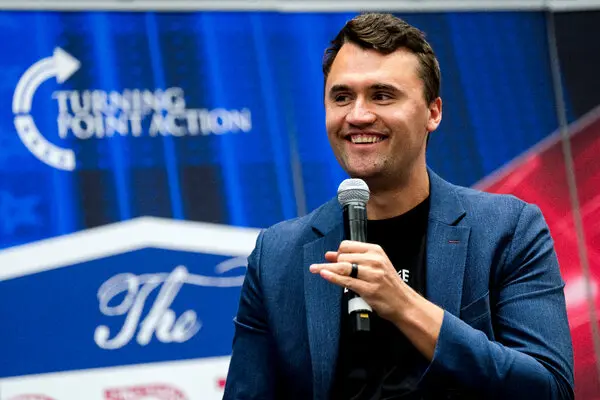
It goes without saying that our country has been focused on the recent shocking and tragic murder of the young Christian apologist and evangelist, Charlie Kirk. Over the weekend, my wife and I were back in my home state of Virginia where I was performing the wedding of my nephew to his new bride and spending time with my parents. This meant I was out of our church pulpit Sunday and could not respond to the flock regarding the grief and implications of what we are all experiencing. Though I was busy tending to family responsibilities over the weekend, the Charlie Kirk story in one form or fashion was in the background of everything else going on.
In view of the responsibility I feel as your senior pastor, I am going to take a moment of time to capture a few things on my mind. I want to say up front that I was more of a casual follower of Charlie Kirk, catching clips of his debates and exchanges, largely centered on college campuses. I admit that I did not realize how young he was (31 years old) and I am still discovering how grounded he was theologically. I was immediately impressed by his depth and facility with God’s Word and his unique skill to integrate current political and societal issues with nuanced theology, Bible passages, and precision citations of biblical words (even in the original languages). To say the least, Charlie was gifted with a photographic memory where he could pull information to competitively dialogue with allcomers in the secular university arena. He was truly one of a kind.
I was especially drawn to Charlie since he had caught the attention of my four sons, who had shared their interest in him with their mom. So he became part of our dinner table discussions. Charlie’s approach—going onto secular college campuses—was an effective way to both draw something of a remnant conservative and (perhaps) evangelical crowd of mostly cheering young people, while at the same time providing an open mic so that anyone who disagreed with him could challenge his beliefs.
I admit that I was a bit skeptical over Charlie’s approach at first largely due to a lack of information about his biblical and spiritual depth. From my personal observation, people with this kind of approach can slide down a slippery slope, highlighting political reform by rallying for a better America to the expense of every believer’s primary mission which is to make disciples of all nations. This is not to say that believers cannot serve in politics for the cause of moral and ethical reform to our country to recapture our Judeo-Christian values. Absolutely they can and there are many who should. I would argue that every believer who works in the private sector should seek to serve in their job to these ends. Still, there are certain uniquely gifted leaders who can rally inspiration for political reform in such a way that eclipses the offense of the gospel. My goal of this blog post is not to unpack the nuances of my opinion about what can become subtle compromise or at the very least a distraction to the believer’s priorities. Instead, I want to celebrate what I am mostly gathering in retrospect about Charlie’s approach and mission.
Charlie’s mission stands distinct in my mind as someone who used the platform of free speech to address our country’s deepest political and societal debates, using logic, provocation, political acumen, and rhetoric to expose where secular universities have corroded our country and society. When you watch Charlie engage in these open air campus debate forums, you see him attacking the issues, sharing his faith in Christ at a moment’s notice, emphasizing the priority of the gospel, and giving a ready defense for how sin can be forgiven through Christ, all with a joyful, winsome smile. Charlie was an inspiration for the cause of conservative politics and national reform. But he was more than that. He was a Spirit-filled follower of Jesus. You might say that Charlie came through the doorway of pro-America rallies, but never to the expense of the gospel, and for this he garners my deepest respect, and it was for this that I believe he is a modern day martyr.
I never would have wished for Charlie to be killed, as with anyone. Yet I couldn’t help but notice that within hours of his assassination, it was being broadcast that because of his unique giftings, Charlie could have taken one of two paths as a cultural influencer.
The first path he could have taken was the route of a classic politician—excellent mind, charming persona, good speaker, moral life, perhaps even presidential material, who knows?
The other path—the one Charlie took—was to go right into the proverbial lion’s den, where he would do battle against the poisonous secular university ideologies being force-fed to American youth. I know firsthand that young people were drawn to Charlie’s candor regarding statements he’d make on the most controversial issues like the life of the unborn, transgenderism, manhood and womanhood, etc. The sense of it was, “Finally! An unfiltered spokesperson for sanity!” It’s a well-known fact that the liberal university agenda has been to brainwash young people with liberal ideology before they can fully mature into adulthood. If you think about it, it’s a genius method. They set the stage for outright lasciviousness by sanctioning drinking and drug parties, which leads to open sexual immorality. Then they follow up with a satanic liberal religion espoused by professor-priests, who mentor students into why this libertine behavior is not only not wrong and not self-destructive, but in fact liberating! By teaching them Marxist socialism, the lines of moral accountability to fornication are erased, and the basic structure of the monogamous nuclear family is destroyed. Charlie’s message was pushing back on this. But he was doing it on their own turf, and was gaining ground. This made him vulnerable.
So, what are the implications of Charlie’s death as a martyr to the Christian faith? Let me list a few potentials.
- The church will become bolder in its witness in American society. Within hours of Charlie being killed, conservative news outlets casted this as an attack on free speech, where people on either side of politics should see this as a statement being made in our country, that if you speak certain words in a public forum, you might be shot. Arguments about the injustice between what a liberal can get away with saying verses a conservative are being espoused, and I get that. However, a Christian who discerns that Charlie’s motivation to speak was at its core driven by his faith in Christ underscores the reality that he was attacked by an evil society ruled by the prince of darkness.
- There is greater exposure to the spiritual realms of light and darkness within our society. This past decade has certainly revealed how dark society can become as a whole, with its riots, political scandals, random acts of violence, school shootings and the like. That said, in the last several decades, we have not seen many outspoken believers who have acquitted themselves like Charlie, and certainly no one who was killed for their faith on this kind of platform in our country. It seems clear to me that Satan wanted to stop Charlie’s witness and he used people to carry out his mission. What this means for the church is that it will become bolder, not shyer, louder and forthright, not quieter and more careful. Christians will stand out. As I briefly stated before, on the face of it Charlie’s assassination was motivated by the offense of his faith. He believed in an exclusive gospel and though he did not push this on people, he spoke of his faith uncompromisingly. Just as Cain rose up and murdered his brother Abel, Charlie was killed at its core for exposing deep seated sin. Remember in Genesis 4 that Cain was warned that he could repent of his bitter anger against God and his brother, which was smoldering inside his heart. The warning, which was God’s gracious truth reaching out, would trigger one of two outcomes, repentance or rage. Cain took to the later, giving himself over to wrath and murder. This same pathology is played out through the Bible, starting with the with the killing of the prophets, and culminating in the murder of Christ, where enraged Jews cried, “Crucify Him!”
- The witness of the church may spread more expansively within our society. “So, where does that leave us with our witness?” It was said by the early church father, Tertullian, “The blood of the martyr is the seed of the church.” Consider this: even outside of the church, a conservative podcaster made the case that had Charlie just been a nominal figure, he would have died and been forgotten in a few days. Life goes on, right? The conservative figure went on to say that he was not nominal, and that in Charlie’s case, in terms of conservatives in our country, “You killed our son.” By implication, Charlie’s death will not be forgotten. It will color our cultural landscape. Days later, I still feel kicked in the stomach, but in a broader more practical sense, Christians will likely take up the challenge to follow in the wake of what Charlie stood for and perhaps in his case, what he stood against. Charlie certainly led with the chin, but he wasn’t looking to merely create animosity but to open conversations that would lead people to truth and, in turn, to a better society. No Christian should seek to provoke persecution. However, once persecution that is based on being a bold witness begins, it does become contagious. This is tracible to the accounts of the early church in the book of Acts. Boldness breeds boldness. I remember last week on the day of the assassination, I walked into a couple of stores. There’s one shop in particular where I have a repour with the clerks from time spent joking around there in repeat visits. After talking about other things, I asked if they had heard the shocking news about Charlie’s murder. I was still in shock from what had happened, not even considering the fact that this could become a polarizing moment. I was met with what felt like a rehearsed line, that in that particular shop, it would not be appropriate to discuss issues like this. In one sense, I understood what he meant because volatility would be bad for business and their ideology would make this volatile. Still, I wasn’t thinking about politics or ideology. I was thinking about caring about someone being gunned down. Still, this experience makes witnessing real. In a different instance, I decided to bring up Charlie’s murder to see how this individual would respond in light of how I was treated in the other store. This time, this young man met me with the same immediate shutdown, but now with angry swearing. I attribute this to darkness being exposed, like it was inside of Cain’s heart. His anger was fueled by guilt which turned to rage. The witness will be spreading.
To say the least, Christians need to understand that this tragic assassination on an individual standing for the truth, in any age, in any culture, according to Christ, is to be expected. Our response to such a tragedy should be in faith, not to say we are not outraged, shocked, sad, and grieving, but not in long-term fear or dread. Our faith should make us bolder in our witness to the watching world, where Christians stand out as more distinct from the world than ever. At the core we are standing for Christ, to give a gospel where the fear of death is gone because we have eternity banked inside our hearts. Yes, engage in politics, never to the expense of our Christian witness, but to build the bridge to the deepest lasting transformation that comes by believing on Christ alone for salvation from the guilt of our sins. With our life, testimony, and speech, we preach Christ, come what may.
sign up for our weekly Quick Connect emails.


